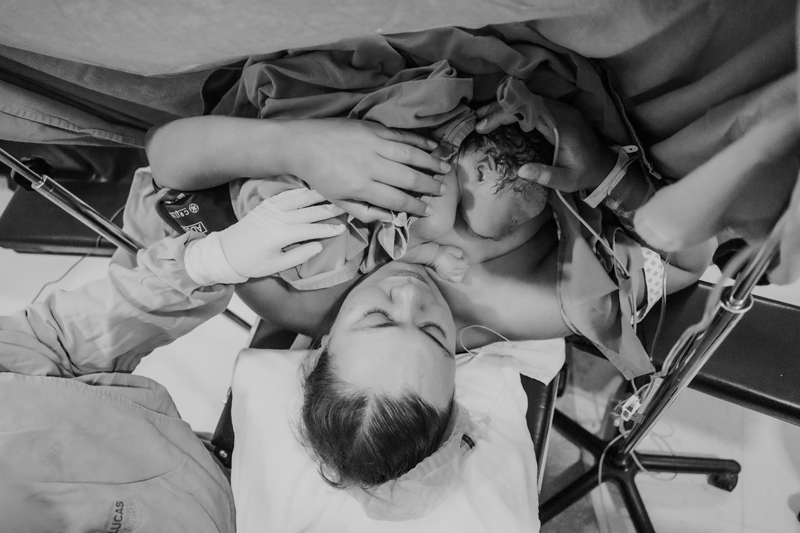
If you’ve had a caesarean birth before, your next pregnancy can bring a very different kind of anxiety. For many, the first caesarean wasn’t a choice, whether baby was breech, your labour didn’t progress, or an unexpected emergency meant a caesarean was the safest way to bring your baby into the world. Even when everything ended well, it can leave you with big feelings: shock, grief, relief, fear, or a sense that your birth plan was taken out of your hands.
When you fall pregnant again, it’s normal for questions to come rushing in. Can I have a vaginal birth this time? Will I be pressured either way? What if something goes wrong again? And even when a vaginal birth after caesarean (VBAC) is medically possible, many parents still feel stuck. Fear has a way of drowning out logic, especially after a birth that didn’t go to plan.
Subscribe for FREE to the HealthTimes magazine
That’s where midwives play an important role by helping families feel informed, supported and safe. Here’s how midwives support VBAC decision-making, what genuinely helps reduce fear, and what parents need to know when considering their options.
A
vaginal birth after caesarean is often referred to as a VBAC. It usually involves planning a trial of labour after caesarean (often shortened to TOLAC), meaning you plan to labour with the aim of having a vaginal birth, while also having a clear backup plan if a caesarean becomes necessary. The goal is the safest birth possible – with calm, informed decision-making along the way.
Fear around VBAC is incredibly common, and midwives see it every day. It can come from:
-
A previous birth that felt traumatic: A prior emergency caesarean, rushed decisions, loss of control, or feeling unheard can leave lasting emotional impact.
-
Confusing or conflicting advice: Some people hear “VBAC is too risky”, while others hear “a second C-section is unnecessary”. Mixed messages can increase fear and make parents feel they’ll be judged either way.
-
Fear of uterine rupture: Uterine rupture (where the previous scar opens during labour) is often the most talked-about risk. It’s uncommon, but can be serious, which is why VBAC planning needs proper monitoring and access to emergency care.
Midwives also help by shifting the focus away from “proving” something, and back toward what matters most – safety, support and informed choice. Many parents feel an internal pressure to “make up for” a previous birth, or to have the experience they hoped for the first time. Others worry they’ll disappoint someone – their care team, their partner, or even themselves – if they don’t choose the “right” option.
FEATURED JOBS
Ontime Health Agency Pty Ltd
A midwife makes it clear there is no gold-star outcome. Instead, they create space for honest conversations about what you’re hoping for, what you’re scared of, and what you need to feel secure. This might include talking through your previous birth story, identifying what felt distressing or out of your control, and making a plan for how things could be handled differently this time.
Midwives can also help you explore practical supports that reduce anxiety in labour, like continuity of care, clear communication preferences, trauma-informed language, and a step-by-step plan for decision points. When fear is named, heard, and supported properly, parents often feel more grounded – and more able to make decisions from a place of confidence rather than panic. One of the most valuable things a midwife can do is turn overwhelming information into something practical and calm.
For example, instead of hearing “You have a risk of uterine rupture”, a midwife can explain:
-
what that risk actually means
-
what signs the team watches for
-
how monitoring works
There are circumstances where VBAC may not be advised, such as certain types of uterine scars or a history of uterine rupture. This is where personalised obstetric assessment matters.
If VBAC isn’t recommended in your case, midwives can still support you through a planned caesarean experience that feels gentle, informed and empowering.
VBAC decision-making works best when it’s not fuelled by panic, pressure, or misinformation. Midwives reduce fear by offering:
-
calm education
-
emotional support
-
realistic planning
-
advocacy for your preferences
-
a safe path forward, whichever way birth unfolds
And when parents feel supported, they tend to make clearer decisions, feel more confident in labour, and experience fewer feelings of distress or regret afterwards, even if the birth doesn’t go exactly as hoped.
Because the “best” birth isn’t a specific delivery method. It’s a birth where you felt safe, respected, listened to, and genuinely cared for.