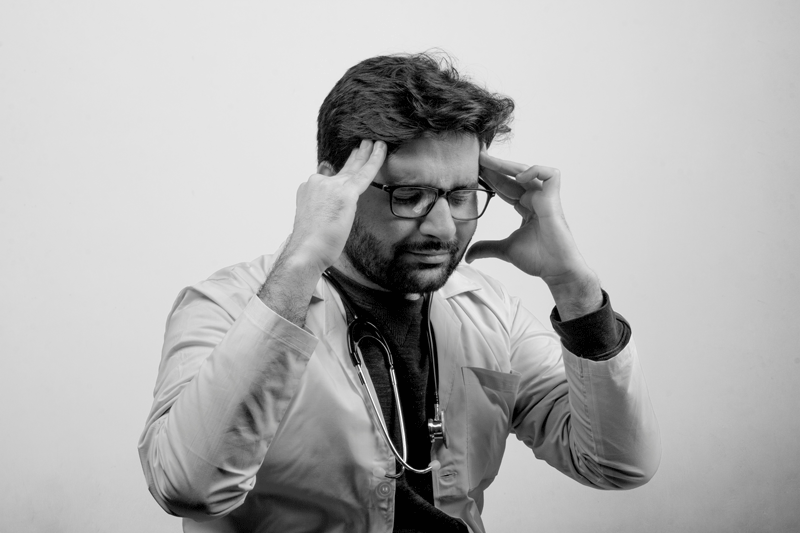
Hospitals are often very emotional places. Families are worried, patients may be in pain or confused, and healthcare professionals are trying to provide safe, effective care under pressure. At times, it can act as a breeding ground when it comes to conflict between families and healthcare staff. A family member may disagree with a treatment plan, relatives might have different views about what care a patient should receive, or sometimes cultural expectations or misunderstandings about medical information can add tension. Australian universities are now preparing healthcare students with the skills needed to manage conflict respectfully and constructively, so future clinicians are better prepared to support patients and families during some of life’s most stressful moments.
Fear and uncertainty are the two main drivers when it comes to family disagreements around medical care. When someone they love is unwell, family members may feel powerless and anxious about what’s to come. That stress can lead to frustration that is then taken out on healthcare staff who are leading the care. In other cases, families may struggle to accept a poor prognosis or limited treatment and lash out.
Subscribe for FREE to the HealthTimes magazine
The
Australian Commission on Safety and Quality in Health Care highlights the importance of engaging patients and families as partners in care to help reduce these misunderstandings and frustrations that result from the feeling of helplessness. It’s no surprise that when families feel included, heard and informed, the chances of conflict often decrease.
The key is communication. Students are learning practical strategies for speaking with patients and families in emotionally charged situations. These include techniques such as:
-
Active listening
-
Acknowledging emotions
-
Explaining medical information clearly
-
Checking understanding
-
Involving families in decision-making where appropriate.
Thanks to technology, these lessons are able to mimic real life to some degree. Simulation laboratories recreate hospital wards, emergency departments and aged care environments that all students can use to work through realistic scenarios where they must communicate with patients, families and colleagues. Students can learn from role-play exercises where they practise conversations with ‘pretend’ family members in distress..
The
University of Sydney’s Susan Wakil School of Nursing and Midwifery, for example, incorporates simulation and communication training into clinical education to help students practise real-world patient and family interactions. At
Monash University, simulation-based education is used extensively to help healthcare students practise both clinical and communication skills before entering professional practice.
Managing family conflict comes down to recognising all the emotions at play. Families may be experiencing grief, shock or guilt, and these emotions can sometimes spill over into anger or frustration. Students are taught strategies such as:
-
Acknowledging distress
-
Allowing family members time to process information
-
Avoiding defensive responses
-
Maintaining professional boundaries.
In Australia’s multicultural healthcare system, cultural beliefs can also influence how families approach medical decisions. In some cultures, families expect to play a central role in decision-making. In others, there may be strong beliefs about end-of-life care or certain medical interventions.
Universities are starting to include cultural safety training to prepare students for these situations. Students learn how to ask respectful questions and better understand family expectations around care to help reduce misunderstandings and support more collaborative relationships between healthcare professionals and families.
Despite best efforts, some disagreements can still escalate. In these situations, healthcare teams may involve senior clinicians, social workers or patient liaison services to help mediate discussions. Many hospitals also have formal processes for addressing disputes about treatment decisions, such as ethics committees or structured mediation processes. Students learn about these escalation pathways during their training so they understand when and how to seek additional support.
Managing family conflict can be emotionally draining for healthcare professionals. Being confronted with anger, grief or frustration regularly can lead to stress and burnout. Students are encouraged to:
-
Debrief with colleagues after difficult encounters
-
Seek support from supervisors
-
Reflect on challenging experiences
-
Maintain professional boundaries.
Healthcare is not just about diagnoses, medications and procedures. It is also about relationships – between clinicians, patients and families. Conflict in hospital settings is sometimes unavoidable, but with the right communication skills, empathy and support, these situations can often be navigated constructively. Through communication training, simulation exercises, cultural education and ethical discussions, future healthcare professionals are learning how to manage difficult conversations with confidence and compassion.