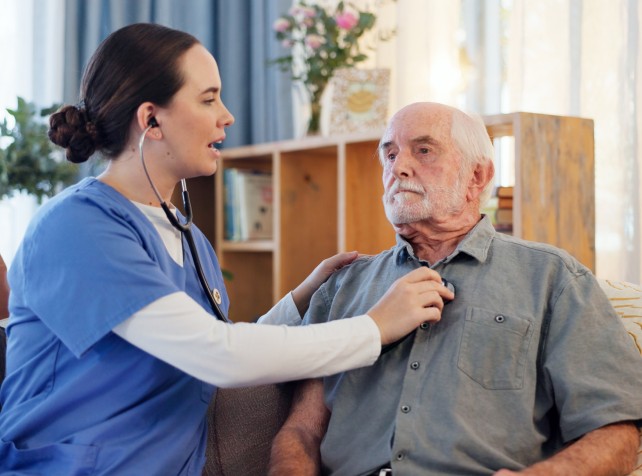
For decades, older Australians navigating in-home aged care have had to contend with a fragmented system: multiple programs, overlapping eligibility criteria and funding structures that were difficult to understand and even harder to navigate. That changed on 1 November 2025, when the Australian Government launched the
Support at Home program, the most significant overhaul of in-home aged care since Home Care Packages were introduced.
For health professionals working across aged care settings, understanding what has changed, and what it means in practice, is now essential.
Subscribe for FREE to the HealthTimes magazine
What is Support at Home?
Support at Home is a unified, government-funded program designed to help older Australians remain living independently at home for longer. It replaced the Home Care Packages Program and the Short-Term Restorative Care Programme on 1 November 2025, bringing both under a single, streamlined framework governed by the new Aged Care Act 2024.
The
Commonwealth Home Support Programme (CHSP), which provides entry-level domestic assistance to older Australians, will transition into Support at Home no earlier than 1 July 2027, allowing lower-needs providers additional time to adjust.
The shift was driven by recommendations from the Royal Commission into Aged Care Quality and Safety, which identified the existing system as overly complex, inequitable and poorly matched to individual needs.
From four levels to eight classifications
One of the most significant structural changes is the move away from the four-level Home Care Package model toward
eight ongoing funding classifications. Annual funding now ranges from approximately $10,731 at Classification 1 to $78,106 at Classification 8, with budgets allocated quarterly rather than annually.
The expanded classification system is intended to more precisely match funding to assessed need. Lower classifications suit people who require occasional help with everyday tasks such as cleaning or transport. Mid-range classifications cover regular personal care, mobility support and allied health. The highest classifications fund comprehensive clinical care, daily multidisciplinary support and palliative care at home.
For clinicians, this matters. A more granular classification system means assessments need to accurately reflect the full complexity of a person's needs, including clinical, functional and psychosocial dimensions. Under-assessment now carries a more direct risk of inadequate funding.
Three short-term pathways
Beyond ongoing classifications, Support at Home introduces three short-term funded pathways that are particularly relevant to clinical practice:
The
Restorative Care Pathway funds time-limited allied health and nursing services aimed at helping people regain function and independence, reducing the need for more intensive ongoing support.
The
Assistive Technology and Home Modifications (AT-HM) Scheme provides upfront funding for equipment and home adjustments to meet assessed needs, from grab rails and shower chairs to more substantial modifications.
The
End-of-Life Pathway provides
up to $25,000 over a 12-week period for palliative services, counselling and family support for participants with a life expectancy of three months or less, with the explicit goal of enabling people to remain at home with dignity. The pathway can be extended to 16 weeks if funding remains available.
Clinical care is fully government-funded
A key principle of the new program, and one clinicians should communicate clearly to patients and families, is that
clinical care services attract no participant contribution, regardless of income or assets. Nursing, physiotherapy and other allied health services are fully funded by the government for all participants.
Contributions apply only to independence and everyday living supports, and are income-tested through Services Australia. This distinction is clinically significant: cost should no longer be a barrier to accessing nursing or allied health care at home.
What this means for how clinicians work
The transition to Support at Home changes not just the funding structure, but the clinical workflow around in-home care.
Assessment carries more weight. Under the new system,
classification is determined by an aged care assessor based on a comprehensive evaluation of physical health, mobility, cognitive function, living arrangements and support networks. Health professionals who contribute to or inform these assessments, GPs, nurses, occupational therapists, physiotherapists and social workers among them, play a direct role in ensuring patients receive funding that reflects their actual needs.
Care planning is now quarterly. Budgets are allocated every three months and reviewed regularly, meaning care plans need to be responsive and well-documented. Clinicians should be aware that if a patient's needs change significantly, reassessment for a higher classification is available at any time.
The role of allied health is more explicitly recognised. Under the Restorative Care Pathway in particular, multidisciplinary allied health input is a funded, named component of the program, not an optional add-on. This is an opportunity for physiotherapists, occupational therapists, speech pathologists and dietitians to advocate for their role in supporting older Australians to remain at home safely.
Existing patients transitioned automatically
For clinicians with patients already receiving Home Care Packages before 1 November 2025, the transition was designed to be seamless. Existing recipients were automatically moved to equivalent Support at Home classifications, retaining their funding levels and providers. Unspent Home Care Package funds carried over into the new program.
Those approved for a Home Care Package before 1 November 2025 but still waiting for funding to be assigned were placed on the
Support at Home Priority System, receiving an equivalent classification once a place became available. Clinicians should be aware that patients in this situation may have experienced some delay in accessing their full funding allocation, and it is worth confirming their current status directly with their provider or through My Aged Care.
New patients assessed from 1 November 2025 onwards enter directly under the Support at Home framework and are assigned classifications under the new eight-tier model.
Looking ahead
Support at Home is a substantial step forward in how Australia funds and delivers care for older people at home. For health professionals, it brings both new responsibilities and new opportunities, particularly around assessment quality, allied health integration and end-of-life care planning.
The
My Aged Care website remains the primary gateway for patients and families seeking assessments, provider information and program details. Clinicians looking for provider-facing guidance can access the
Support at Home Program Manual through the Department of Health, Disability and Ageing.
As the program continues to bed down through 2026, staying informed will be essential to ensuring older Australians receive the full benefit of what is, on paper, a significantly more equitable and clinically responsive system. The sector will also be watching closely to see whether the Commonwealth Home Support Programme transition, scheduled no earlier than July 2027, delivers the same consistency of access for the many older Australians who currently rely on entry-level community support.