





Everyday health complaints like fatigue, stomach pain or flushing may seem harmless - but for some Australians, they could point to a far more serious underlying condition.
Meredith Cummins, CEO of NeuroEndocrine Cancer Australia (NECA), says thousands of people could be living with undiagnosed neuroendocrine tumours (NETs) because the warning signs are often mistaken for more common ailments.
“Many patients report visiting their GP multiple times with persistent symptoms before getting a proper diagnosis,” Cummins said.
“Flushing of the face or chest, persistent diarrhoea, abdominal pain, wheezing or shortness of breath, rapid heartbeat, and unexplained weight changes are all potential indicators that should not be ignored.”
Neuroendocrine cancer affects the cells that produce hormones and can develop in various parts of the body - including the lungs, pancreas, intestines, and other organs. Because these tumours can release hormones or interfere with normal function, symptoms vary widely from person to person.
“One of the most common signs is what we call ‘episodic symptoms’ - problems that come and go, which can make patients and doctors downplay symptoms,” Cummins explained.
This unpredictable pattern often causes patients to dismiss symptoms as temporary or lifestyle-related.
Cummins noted that patients with certain types of neuroendocrine cancer can experience carcinoid syndrome, which may cause heart palpitations, facial flushing and diarrhoea, particularly after eating certain foods or drinking alcohol.
“What makes these symptoms tricky is they often happen in clusters and episodes rather than consistently. This pattern leads many people to dismiss them as temporary digestive issues or stress responses,” she added.
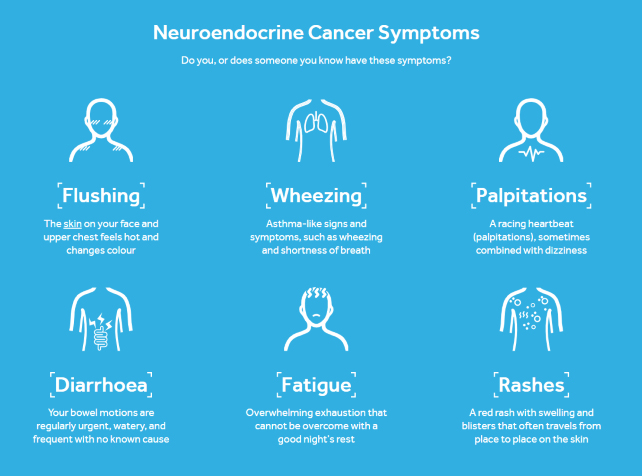
(Image: Neuroendocrine cancer common symptoms. Credit: NECA)
The agency projects 5,719 new cases of NETs will be diagnosed in Australia in 2025 - around 3.4% of all new cancer cases that year.
This marks a sharp increase from 1,173 cases in 1982 to nearly 5,800 in 2024, driven by both greater awareness and advances in diagnostic imaging.
Despite the rise, Cummins says there’s reason for optimism.
“The good news is that survival rates have improved,” she said. “Patients diagnosed in 2025 with neuroendocrine tumours now have a 51% five-year survival rate, compared with just 21% between 1989–1993.”
More than 31,000 Australians are currently living with a neuroendocrine tumour diagnosed in the past five years, underscoring the importance of continued research and public awareness.
Because symptoms often appear in cycles or vary in intensity, Cummins urges Australians to pay close attention to persistent or recurring changes in their health.
“The most important thing is awareness. If you have persistent symptoms that doctors can’t explain, especially if they come and go in patterns, ask about neuroendocrine testing,” she advised.
“Earlier diagnosis means better outcomes and treatment options. We want people to trust their instincts if something doesn’t feel right with their health, even if it is individual symptoms that seem minor.”
Keeping a symptom diary, she adds, can be a valuable tool in helping doctors identify patterns that may otherwise be missed.
“Pay attention to changes in your body, particularly symptoms that persist for more than a few weeks or recur in patterns,” Cummins said. “Tracking them can make a real difference in enabling earlier diagnosis.”

(Image: Awareness and early detection. Credit: fizkes/Shutterstock)
While many Australians may associate cancer with sudden or dramatic symptoms, neuroendocrine tumours often whisper rather than shout. Their early warning signs can look like stress, digestive problems, or even menopause.
By learning to recognise these patterns - and asking the right questions - individuals can play a critical role in catching the disease earlier and improving their outcomes.
Meredith Cummins, CEO of NeuroEndocrine Cancer Australia (NECA), says thousands of people could be living with undiagnosed neuroendocrine tumours (NETs) because the warning signs are often mistaken for more common ailments.
Subscribe for FREE to the HealthTimes magazine
“Many patients report visiting their GP multiple times with persistent symptoms before getting a proper diagnosis,” Cummins said.
“Flushing of the face or chest, persistent diarrhoea, abdominal pain, wheezing or shortness of breath, rapid heartbeat, and unexplained weight changes are all potential indicators that should not be ignored.”
Why Neuroendocrine Cancer Is Often Missed
Neuroendocrine cancer affects the cells that produce hormones and can develop in various parts of the body - including the lungs, pancreas, intestines, and other organs. Because these tumours can release hormones or interfere with normal function, symptoms vary widely from person to person.FEATURED JOBS
Financial Reporting Manager
GenesisCare
Physiotherapist Transition Care Program
St Vincent's Hospital
Administrative Assistant
St Vincent's Hospital
“One of the most common signs is what we call ‘episodic symptoms’ - problems that come and go, which can make patients and doctors downplay symptoms,” Cummins explained.
This unpredictable pattern often causes patients to dismiss symptoms as temporary or lifestyle-related.
Cummins noted that patients with certain types of neuroendocrine cancer can experience carcinoid syndrome, which may cause heart palpitations, facial flushing and diarrhoea, particularly after eating certain foods or drinking alcohol.
“What makes these symptoms tricky is they often happen in clusters and episodes rather than consistently. This pattern leads many people to dismiss them as temporary digestive issues or stress responses,” she added.
(Image: Neuroendocrine cancer common symptoms. Credit: NECA)
Rising Rates and Improving Survival
Recent figures from the Australian Institute of Health and Welfare (AIHW) highlight the growing prevalence of neuroendocrine tumours.The agency projects 5,719 new cases of NETs will be diagnosed in Australia in 2025 - around 3.4% of all new cancer cases that year.
This marks a sharp increase from 1,173 cases in 1982 to nearly 5,800 in 2024, driven by both greater awareness and advances in diagnostic imaging.
Despite the rise, Cummins says there’s reason for optimism.
“The good news is that survival rates have improved,” she said. “Patients diagnosed in 2025 with neuroendocrine tumours now have a 51% five-year survival rate, compared with just 21% between 1989–1993.”
More than 31,000 Australians are currently living with a neuroendocrine tumour diagnosed in the past five years, underscoring the importance of continued research and public awareness.
The Power of Awareness and Early Detection
Because symptoms often appear in cycles or vary in intensity, Cummins urges Australians to pay close attention to persistent or recurring changes in their health.“The most important thing is awareness. If you have persistent symptoms that doctors can’t explain, especially if they come and go in patterns, ask about neuroendocrine testing,” she advised.
“Earlier diagnosis means better outcomes and treatment options. We want people to trust their instincts if something doesn’t feel right with their health, even if it is individual symptoms that seem minor.”
Keeping a symptom diary, she adds, can be a valuable tool in helping doctors identify patterns that may otherwise be missed.
“Pay attention to changes in your body, particularly symptoms that persist for more than a few weeks or recur in patterns,” Cummins said. “Tracking them can make a real difference in enabling earlier diagnosis.”
(Image: Awareness and early detection. Credit: fizkes/Shutterstock)
A Call to Listen to Your Body
While many Australians may associate cancer with sudden or dramatic symptoms, neuroendocrine tumours often whisper rather than shout. Their early warning signs can look like stress, digestive problems, or even menopause.By learning to recognise these patterns - and asking the right questions - individuals can play a critical role in catching the disease earlier and improving their outcomes.
Related Articles
- Livestrong cancer charity head quits
- Obesity tie to 500,000 cancer cases a year
- No brain cancer boom despite more phones
- Authorities are warning NSW residents over 'damaging' smoke
- E-cigarettes 'gateway' to smoking for non-smokers
- From Classroom to Clinic: The Role of Ethics in Modern Medical Training
Comments
Thanks, you've subscribed!
Share this free subscription offer with your friends


